
Research infrastructure and facilities
LIREI operates an instrumented apartment, a storage bench, a computing cluster and simulation platforms, which together let its work be validated all the way from model to real conditions.
Coming — fall 2026
Pavillon Pellerin-Marmen
LIREI will move part of its activities into UQTR’s new research building on green and sustainable technologies, in downtown Trois-Rivières.
The building offers 4,200 m² over four floors and a basement, and will house more than fifteen research laboratories across four axes: energy, food, environment and sustainable development. It is itself an object of study: geothermal energy, photovoltaic panels, biofactories and rooftop urban greenhouses.
Begun in March 2024, construction reached provisional handover in spring 2026, with occupancy planned for the fall. The spaces allocated to the laboratory will be detailed here once the fit-out is complete.
Building website →
Experimental facilities
Instrumented facilities where management strategies meet real loads and real conditions.
Smart apartment
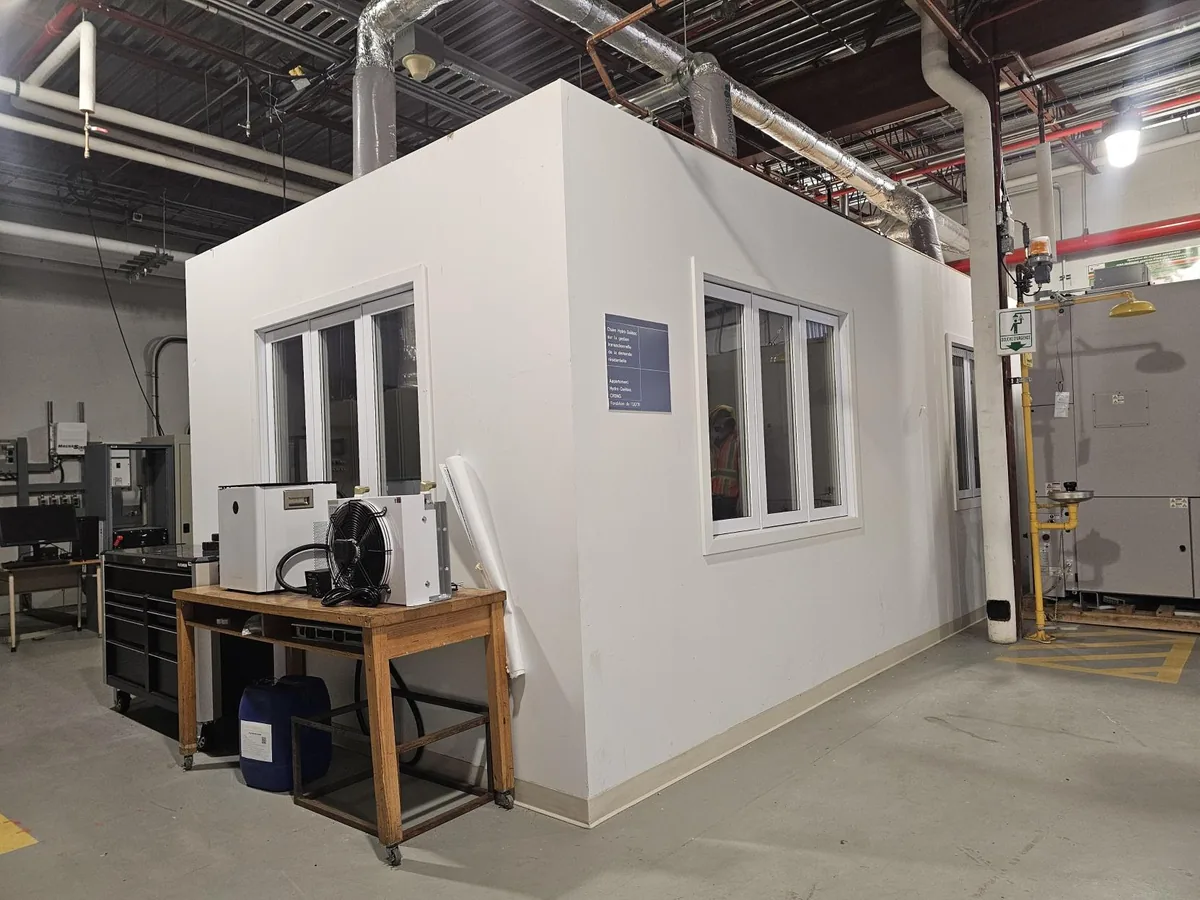
A fully instrumented dwelling at the Hydrogen Research Institute, where demand management strategies meet real use: heating and cooling driven by a Delta Controls controller over BACnet, water heater, appliances, EV charging stations and circuit-by-circuit consumption metering. Using an open building automation protocol means strategies can be tested on the same equipment found in commercial buildings. This is where the laboratory's algorithms meet occupant behaviour.
Storage and conversion bench
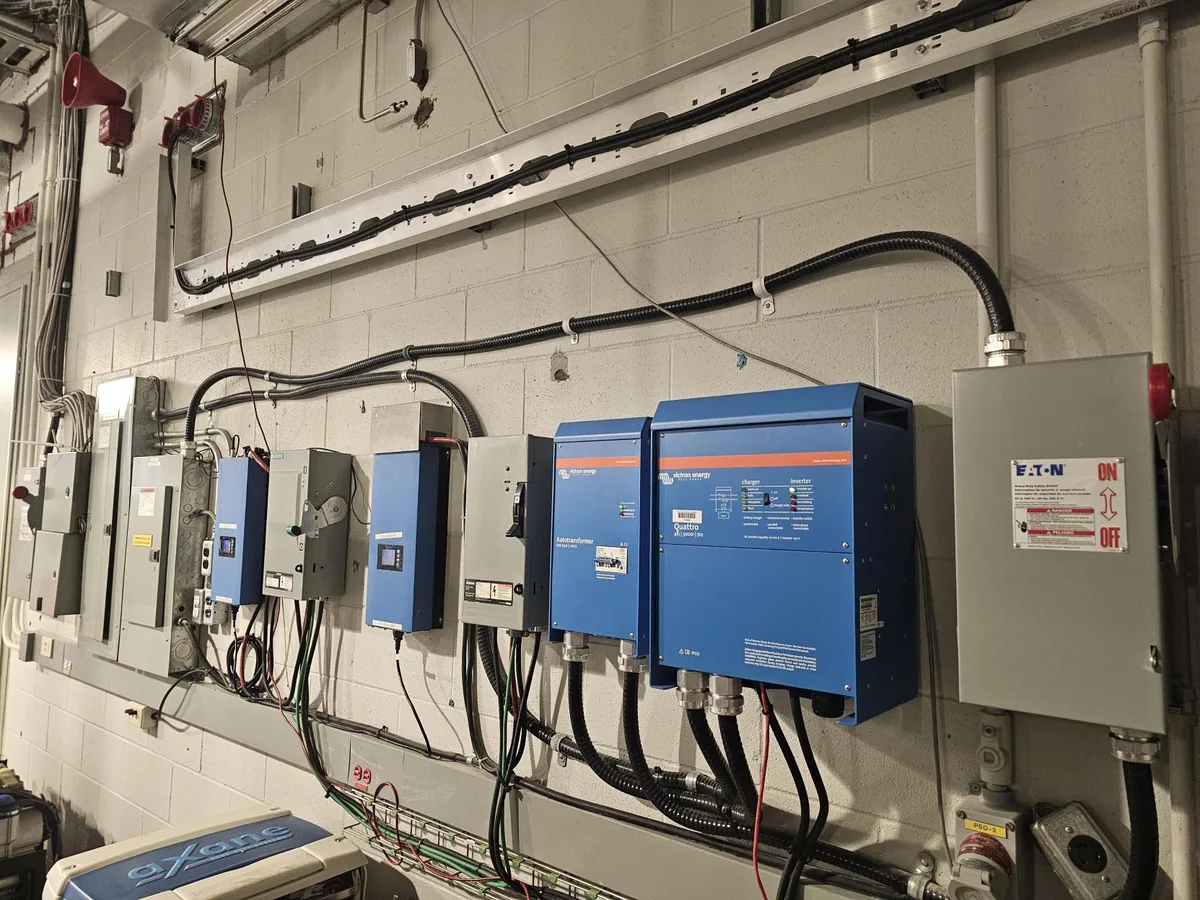
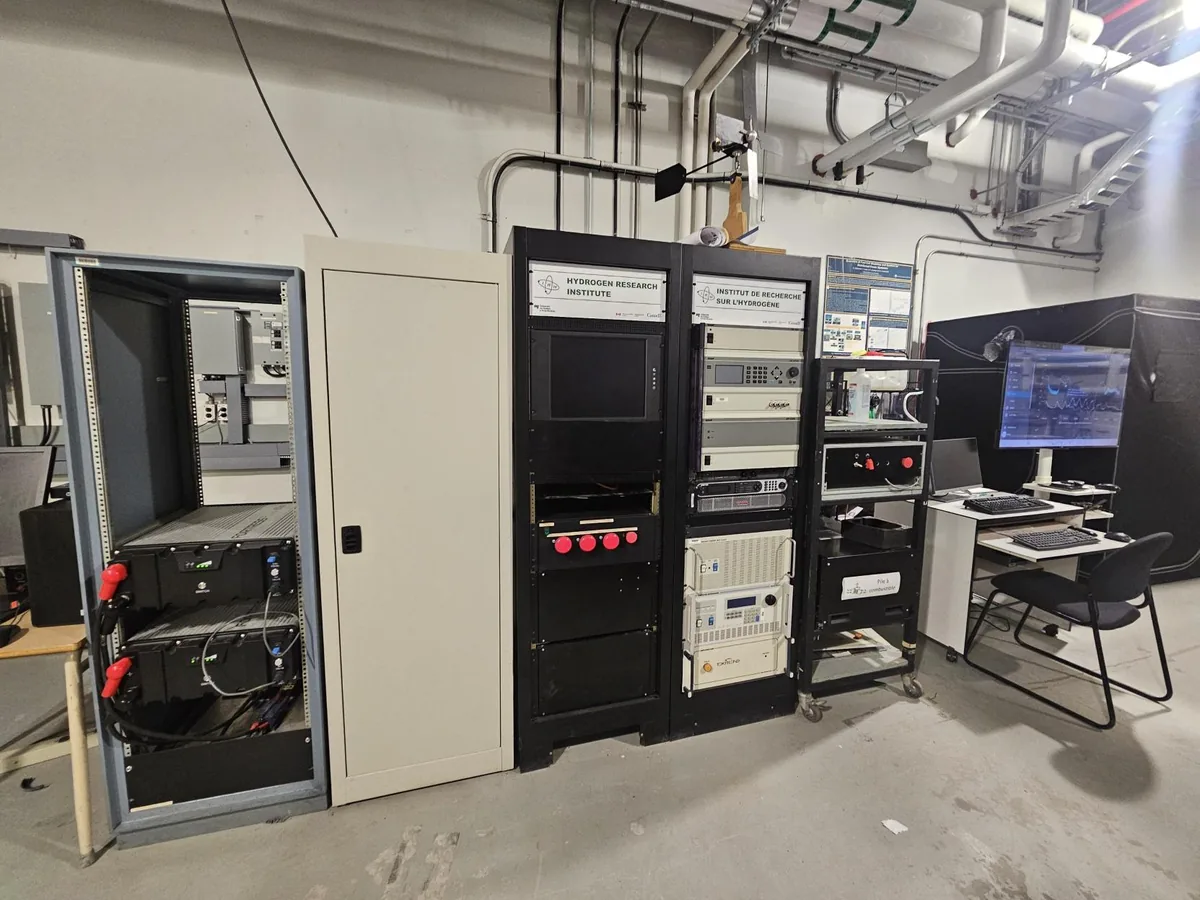
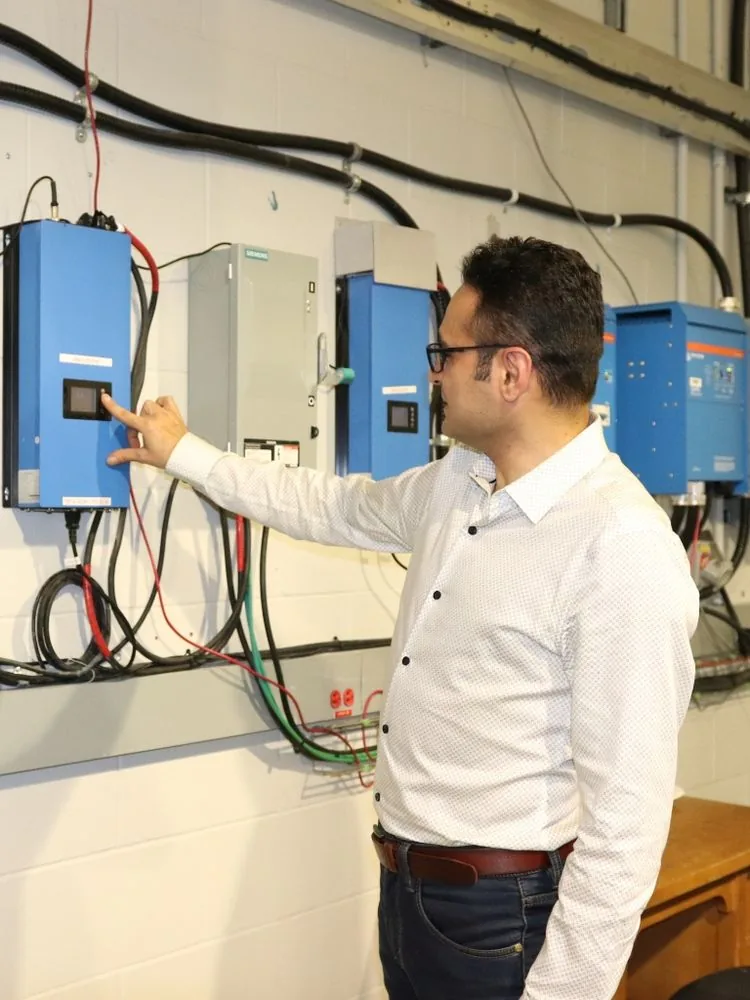
A Victron Energy Quattro 5,000 VA 48 V inverter-charger — pure sine wave, 70 A charger, two AC inputs with an integrated transfer switch — coupled to two Fortress Power eFlex 5.4 kWh batteries, 10.8 kWh of lithium iron phosphate with closed-loop communication between the batteries and the inverter. The two inputs allow switching between grid, generator and islanded operation: self-consumption, peak shaving, grid support and isolated microgrid.
Instrumented growth chamber
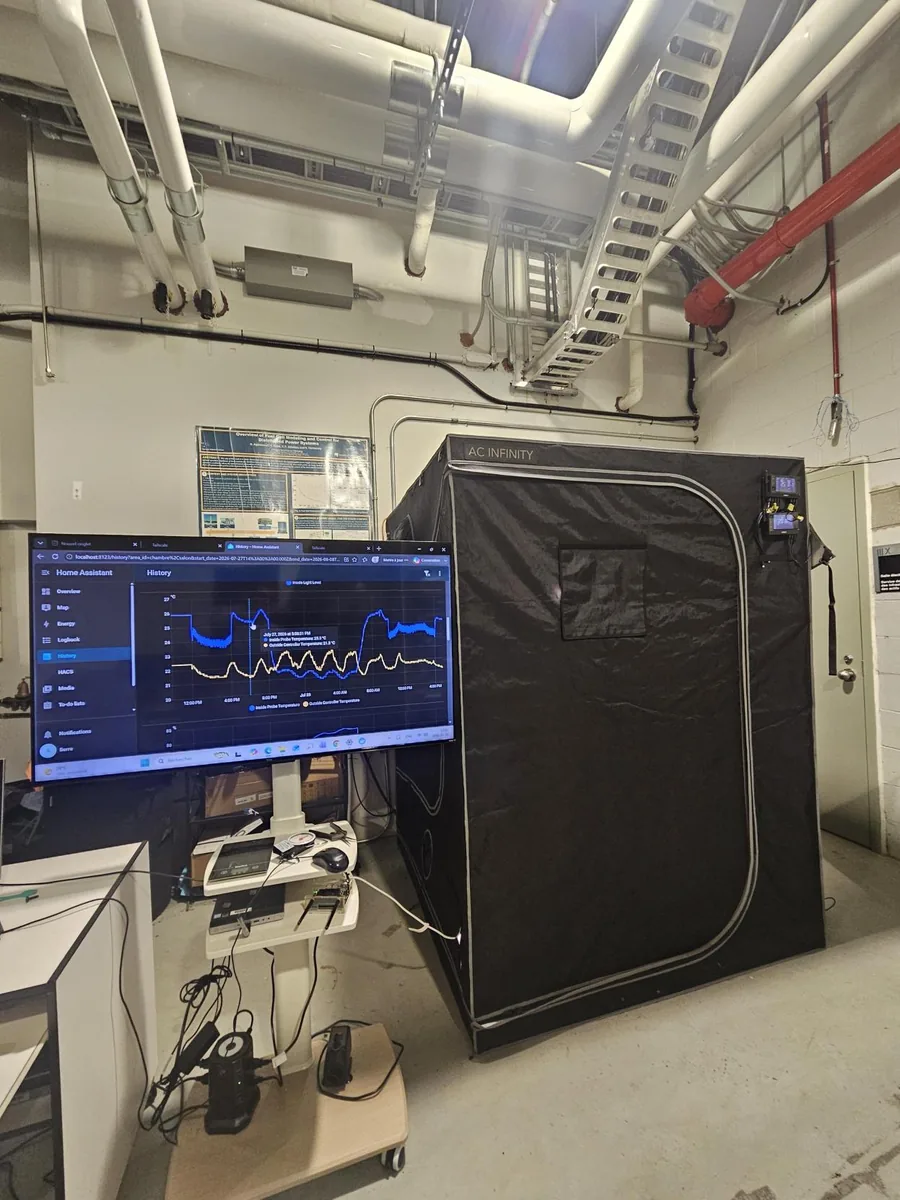
A climate-controlled growth enclosure, instrumented for temperature and humidity and supervised through an open home-automation platform that continuously historises the measurements. It offers a small scale, freely controllable, on which to test predictive control and greenhouse energy management strategies before transposing them to real conditions.
Edge computing cluster
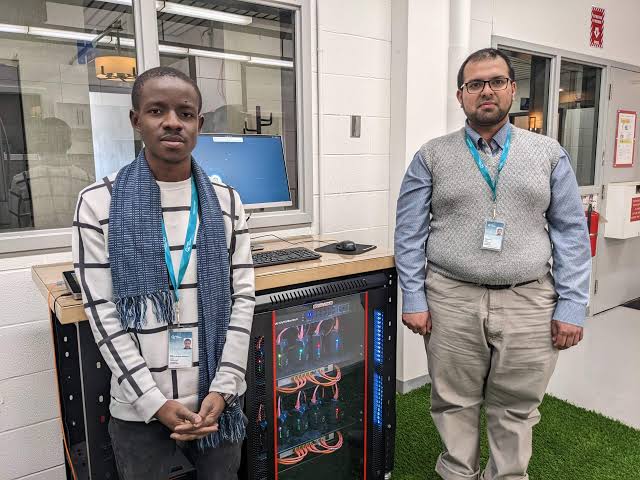
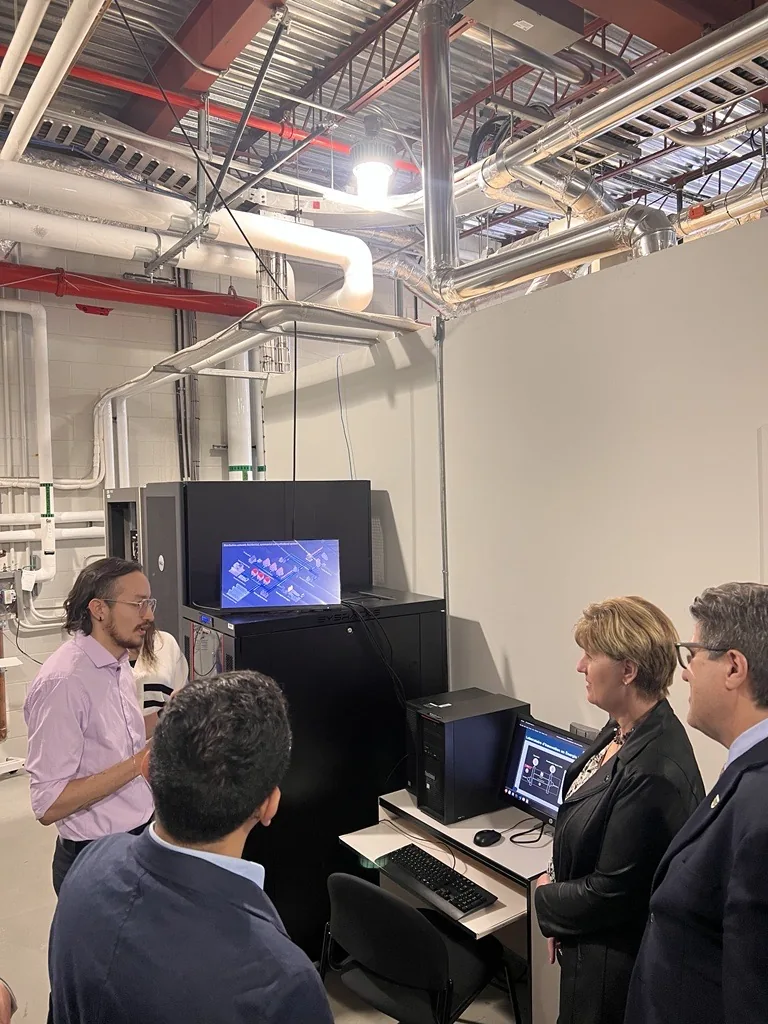
A thirteen-node cluster — eleven Raspberry Pi 4 boards and two x86 servers — under Kubernetes, carrying acquisition and control close to the equipment: wireless sensors, message broker, local historian and execution of control policies. Its size makes it a platform for studying distributed agent deployment and the division of work between edge and cloud.
Computational facilities
Computing, simulation and data platforms for testing mechanisms at scale before deployment.
Computing cluster
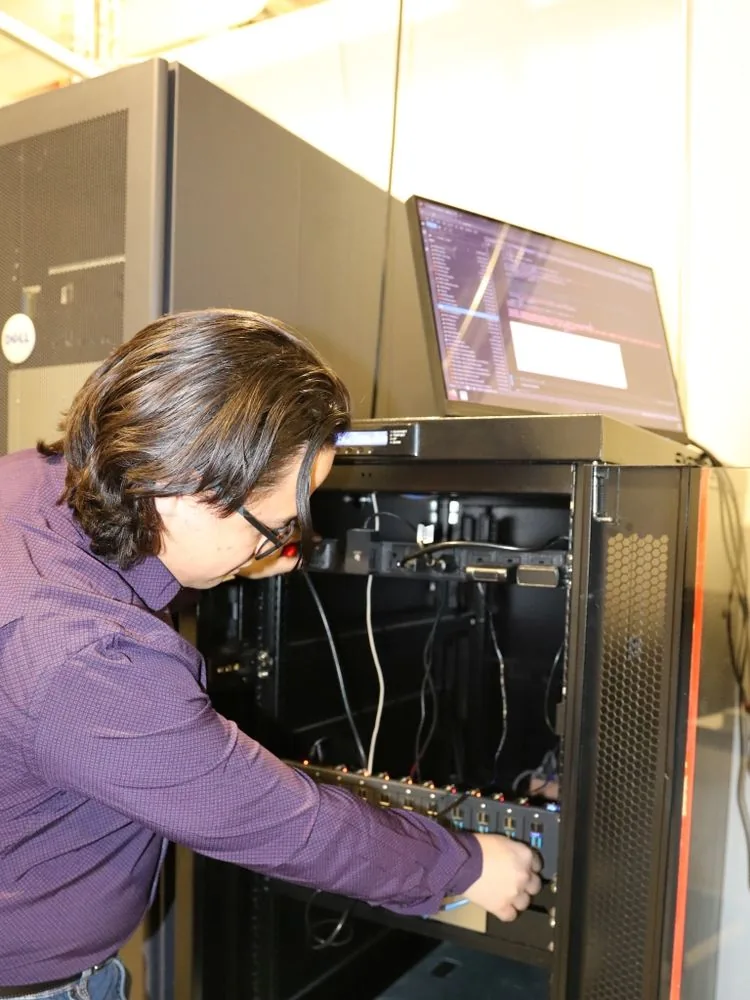
Four Dell PowerEdge R740xd servers totalling 384 execution threads, close to 4 TB of memory and eight NVIDIA Tesla P40 accelerators (192 GB of GPU memory), under Kubernetes with distributed storage. The cluster hosts model training, simulation campaigns and the laboratory's data platforms.
Simulation and digital twins
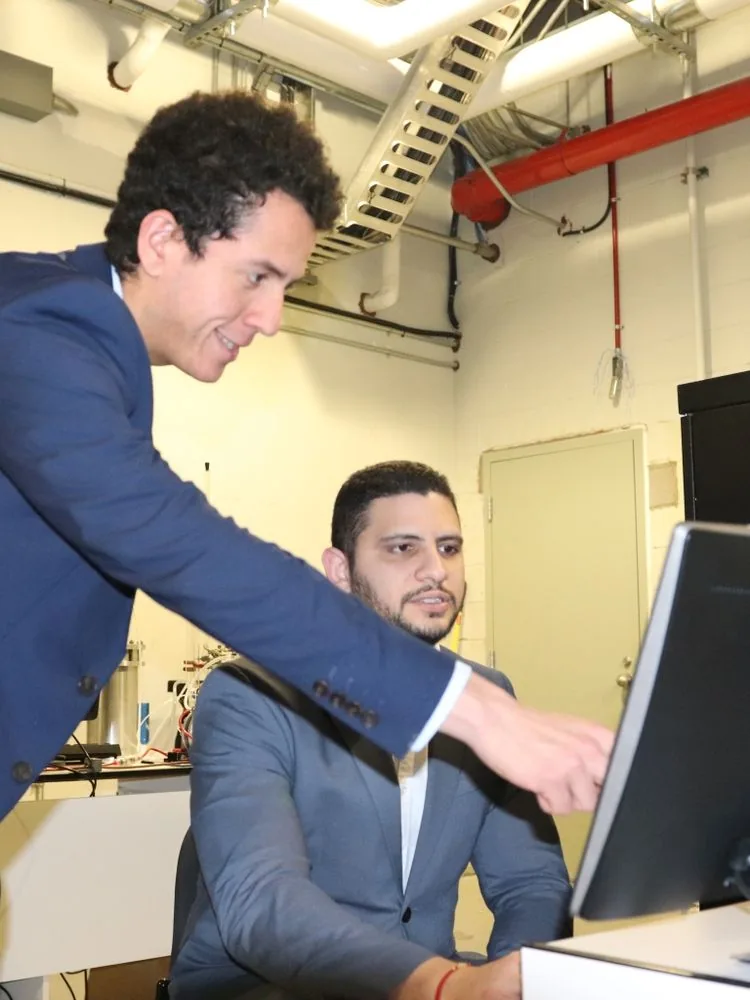
Co-simulation of distribution and communication networks, network digital twins and physics-based greenhouse simulators, to test transactive mechanisms and control strategies at a scale unreachable in the laboratory.
Data
Field measurement sets that feed modelling, forecasting and learning.
Data and historian
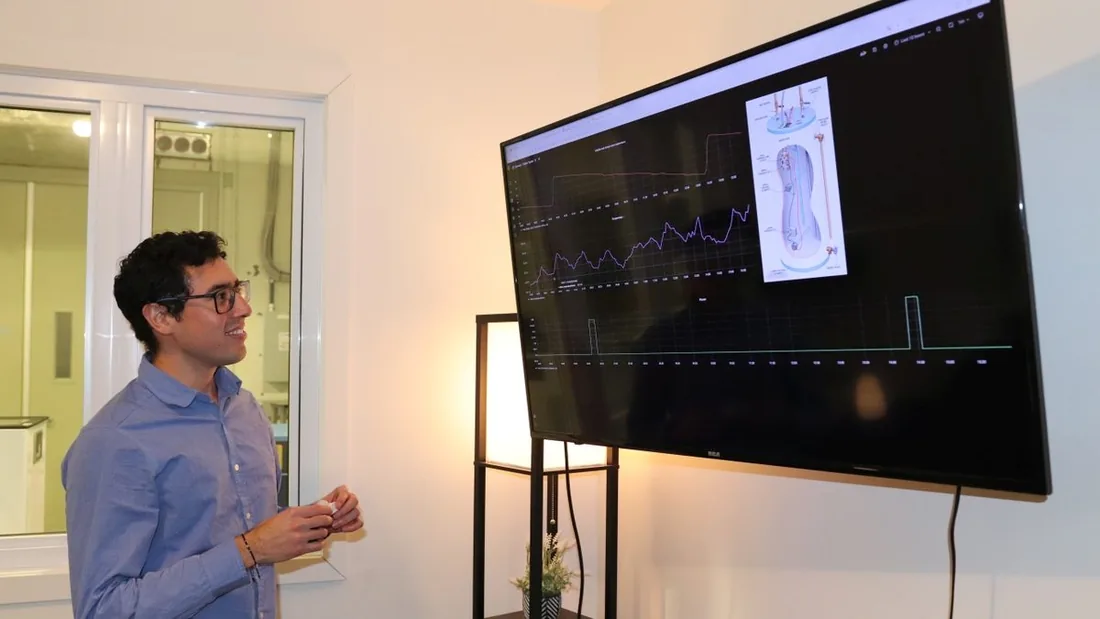
Measurements from the apartment and the test benches — consumption, charging, occupancy, climate — are stored as time series and feed modelling, forecasting and machine learning.
Work environment
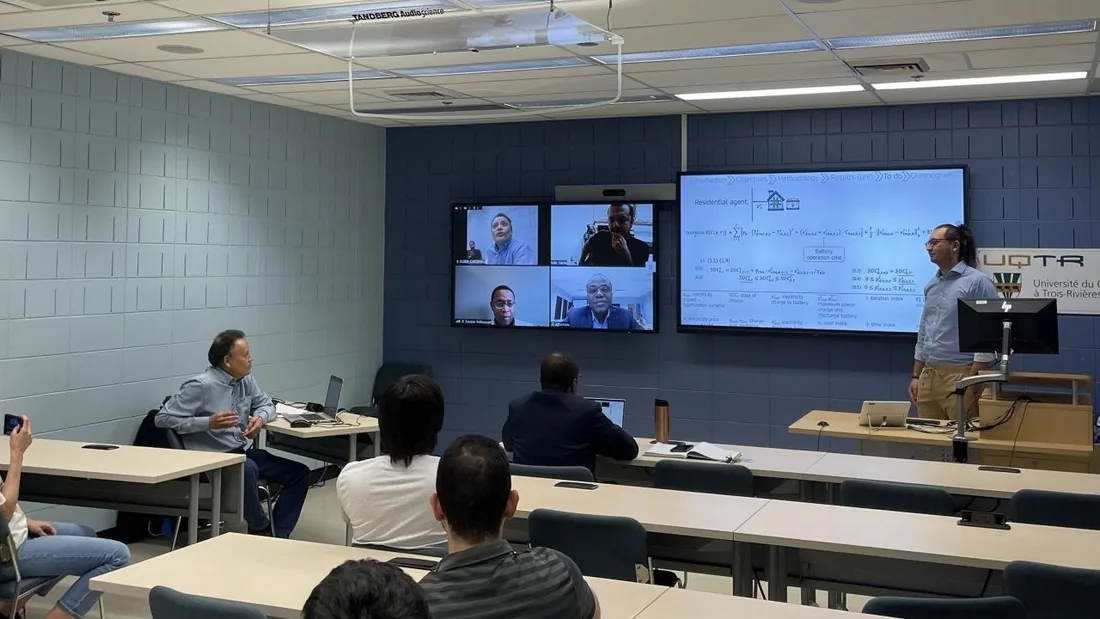
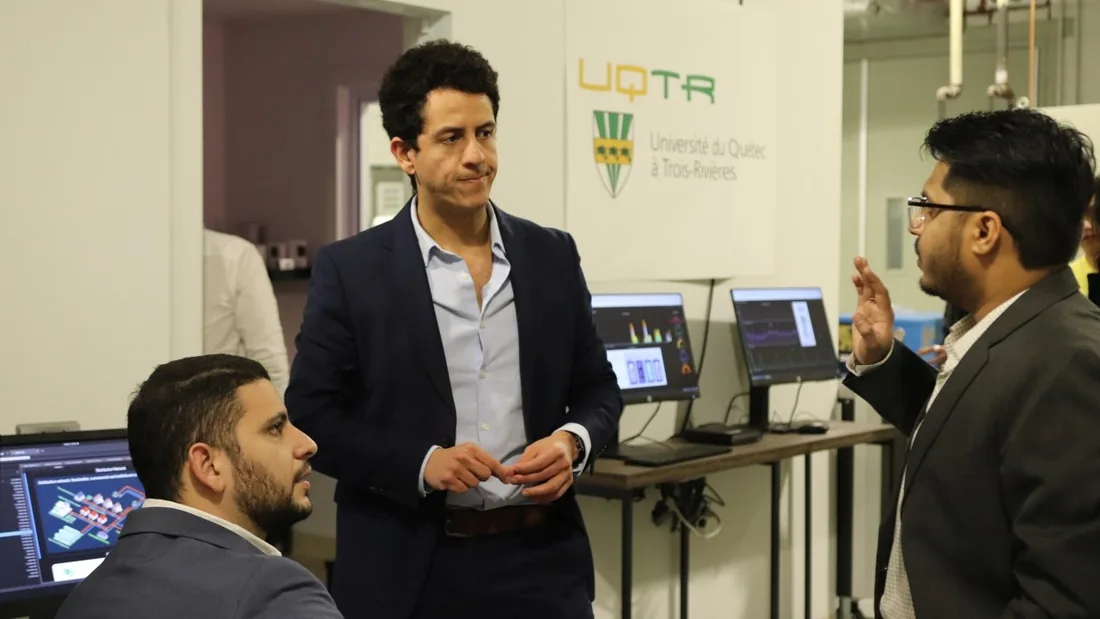
The laboratory offers an inclusive and innovative environment that fosters interdisciplinary collaboration, mentorship and scientific dissemination. Graduate students benefit from supervision conducive to professional development and publication.
LIREI's work attracts strong industrial interest in Quebec: our network of partners is the main source of project funding.
Join the laboratory
LIREI is always looking for motivated graduate students interested in intelligent energy management.